





















Don Recommends Death Penalty for Politicians, Others Found Guilty of Corruption


By: Israel Adeleke
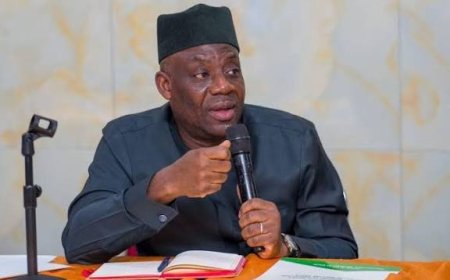
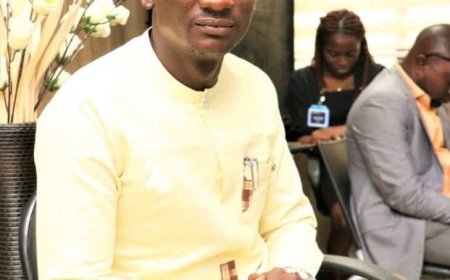
OPEN TELEVISION NAIJA (OTN) News reports as gathered that a Professor of Political Science and Rector of Kogi State Polytechnic, Lokoja, Salisu Ogbo Usman, has called for the death penalty to be imposed on Nigerians found guilty of corruption, arguing that only the stiffest punishment can deter the entrenched practice that has severely damaged the nation’s development and global image.
OTN News further reports as gathered that, Usman made the recommendation on Thursday while delivering the 37th Inaugural Lecture of the Federal University, Lokoja (FUL), at its Adankolo Campus.
The lecture, titled “Corruption Versus Corruption: Unpacking the Wuru-Wuru of the Anti-Corruption Crusade in Nigeria,” examined the depth, causes and contradictions surrounding Nigeria’s long-running battle against corruption.
The rector urged the Nigerian government to classify corruption as a capital offence within the country’s legal framework, insisting that the scale of damage it has inflicted on governance, the economy and social values justifies such a drastic measure.
According to him, corruption has not only stalled national growth but has also battered Nigeria’s reputation on the global stage.
Usman lamented that corruption has permeated virtually every layer of Nigerian society, noting that its manifestations are often rooted in scarcity and deprivation.
He explained that the lack of basic living essentials, including access to clean water and other social amenities, creates fertile ground for corrupt practices, with basic infrastructure such as boreholes often repackaged as “dividends of democracy” and exploited for political leverage.
He further attributed the persistence of corruption to a growing culture of materialism and an intense craving for wealth, which he said has intensified as society modernises.
According to him, the shift from ascribed status to achieved status has pushed many Nigerians to pursue success through unethical and corrupt means.
Illustrating the pervasiveness of the problem, Usman cited everyday examples across different sectors of society.
He described how petty traders manipulate measuring tools to cheat customers, mechanics connive to defraud clients, and public officials are routinely labelled as thieves.
He added that corrupt practices are evident in hospitals, where patients are allegedly forced to pay unofficial fees before receiving medication, and within law enforcement, where extortion at checkpoints has become normalised.
The academic also highlighted corruption in public service processes, including wage deductions by pay clerks, illicit fees charged by produce examiners, and kickbacks demanded by domestic workers’ supervisors.
According to him, these practices reinforce a vicious cycle in which corruption becomes both normalised and self-sustaining.
Usman argued that corruption has continued to thrive in Nigeria despite the existence of multiple anti-corruption agencies because of the politicisation of such institutions.
He accused authorities of selectively deploying anti-graft agencies against political opponents while allowing allies to evade justice.
He also criticised the abuse of plea bargains, which he described as escape routes for wealthy offenders.
To address the challenge, the rector called for a fundamental rethink of Nigeria’s anti-corruption strategy.
He urged policymakers to move beyond what he termed “performative campaigns” and focus instead on systemic reforms and preventive measures.
He emphasised the need to strengthen institutions through genuine autonomy, transparency, effective checks and balances, and taxation-based accountability, rather than continued dependence on resource rents.
OTN News observes from the information gathered that, Usman also advocated economic diversification to reduce overreliance on the state sector and create productive opportunities for citizens, coupled with equitable resource distribution to curb desperation and inequality.
He stressed the importance of ethical reorientation and the restoration of civic values to rebuild the moral foundation of society.
“We must reject ‘Wuru-Wuru’ and ‘Paddy-paddy’ arrangements,” he said, invoking the words of legendary musicians Fela Kuti and African China, as well as moral teachings from religious texts. “True change requires sincerity, not just rhetoric. The ‘Beautyful Ones’ must be born now.”
What's Your Reaction?