

























NAFDAC Uncovers Fake Goya Oil Factory, Dismantles Alcohol Counterfeit Syndicate in Lagos

By: Israel Adeleke
OPEN TELEVISION NAIJA (OTN) News reports as gathered that the National Agency for Food and Drug Administration and Control (NAFDAC), has uncovered an illegal factory producing counterfeit “Goya oil” and dismantled a major syndicate involved in the production of fake alcoholic drinks in Lagos, warning that the activities pose serious risks to public health.
OTN News further reports as gathered that the Director of Investigation and Enforcement at NAFDAC and Chairman of the Federal Task Force on Fake and Substandard Products, Mr Martins Iluyomade, addressing journalists at a press conference in Lagos over the weekend, said that the discoveries were made during surveillance and enforcement operations conducted over the past few weeks.
OTN News observes from the information gathered that Iluyomade described the findings as alarming, noting that the agency deemed it necessary to brief Nigerians on the scale of the illegal activities uncovered.
“We have carried out a couple of activities in recent weeks, and what we discovered was very surprising to us. We felt it was important to speak with Nigerians so they can know what has been going on,” he said.
He disclosed that NAFDAC operatives uncovered an illegal operation within the Oke-Arin market area of Lagos, where counterfeit Goya oil was being produced locally and sold to unsuspecting consumers.
According to him, while original Goya oil is legitimately imported into Nigeria by an authorised company and remains in circulation, fraudsters had set up a crude production process inside the market to imitate the product.
“The original Goya oil is imported into this country through a reputable company, and there are still original products in circulation. But we discovered that some people were faking this product and manufacturing it inside the market,” Iluyomade said.
He explained that the fake oil was produced by burning palm oil and adding chlorine, using rudimentary equipment such as stoves.
“They were using a stove. We saw the stove and everything they were using. We also saw a large number of empty bottles they were refilling and repackaging,” he added.
Iluyomade issued a strong warning to Nigerians, particularly churches and prayer houses where the oil is often used, stressing that authentic Goya oil is never packaged in plastic (PET) bottles.
“Let me say this clearly to everybody—churches, prayer houses, and anywhere this oil is used: there is no original Goya oil packed in plastic bottles. Original Goya oil comes in glass bottles,” he said.
He urged the public to immediately report anyone selling Goya oil in plastic bottles to the nearest NAFDAC office, warning that the product could be dangerous.
“Anywhere you see Goya oil being sold in PET bottles, report it. People should beware,” he cautioned.
Iluyomade expressed concern over the increasing use of fake anointing oils in religious settings, describing the practice as hazardous.
“Some people even drink anointing oil. You are not drinking anointing oil—you are drinking poison,” he warned.
He explained that NAFDAC’s enforcement strategy focuses on shutting down production at the source rather than punishing unsuspecting traders.
“We are stopping the production. Once there is no new supply, whatever is in the market will dry up,” he said.
“We do not want to compound the problem of market women and others who may not know. But for the producers, it is the end of the road.”
Iluyomade appealed to religious organisations to cooperate with the agency to prevent the circulation of fake products within their premises.
“We are not issuing threats, but it will not be nice for us to arrest people within your premises. Please partner with us and do not allow the sale or use of this product,” he said.
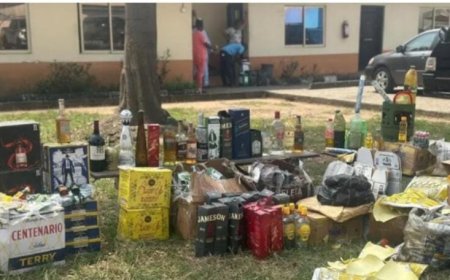
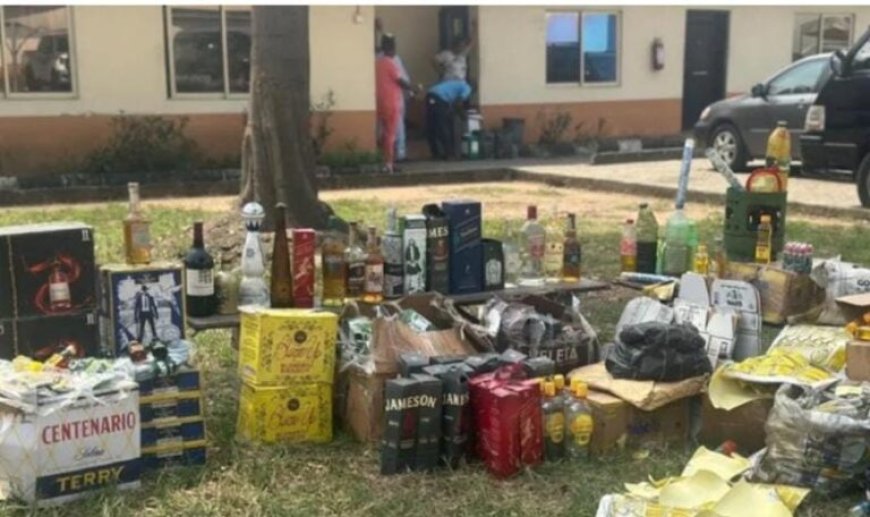
The NAFDAC official also revealed that the agency had busted a large-scale operation involved in the counterfeiting of alcoholic drinks in Lagos, describing the practice as widespread and easy to carry out.
“The faking of alcoholic drinks has become seriously endemic in Nigeria because it is one of the easiest products to counterfeit,” he said.
He disclosed that a suspect, Mr Moses Nelson, was arrested in the Badagry area of Lagos and has since been charged to court.
“In his house, we found all manner of fake products—virtually every major brand. There was none we did not see,” Iluyomade said.
According to him, the syndicate operated an organised distribution network, producing fake alcoholic drinks in Badagry and supplying them to major markets across Lagos.
Iluyomade warned distributors against patronising unauthorised suppliers, urging them to deal only with recognised brand owners and approved channels.
“You know the original owners of these brands. Why buy from people you know are not the owners just to make more money? In the process, you are killing people,” he said.
He also advised consumers to be suspicious of products sold at unusually low prices.
“If the normal price is five naira and someone offers it at three naira, you should be suspicious. The little money you want to save, I hope you will not spend it in the hospital,” he cautioned.
Emphasising that no one has the right to endanger the lives of others for profit, Iluyomade called on those involved in counterfeit production to abandon the practice.
“We are all Nigerians and everyone wants to make ends meet, but no Nigerian has the right to make ends meet at the expense of the health of another Nigerian,” he said.
“No one has the right to make huge profits while increasing the health burden of this country.”
He, however, assured Nigerians that NAFDAC would continue sustained enforcement actions across the country and urged the public to stop patronising counterfeit products and to report suspicious activities to the agency.
What's Your Reaction?