
































Nigeria’s Public Debt Rises to N153.29trn as Borrowing Pressures Persist — DMO

By: Israel Adeleke
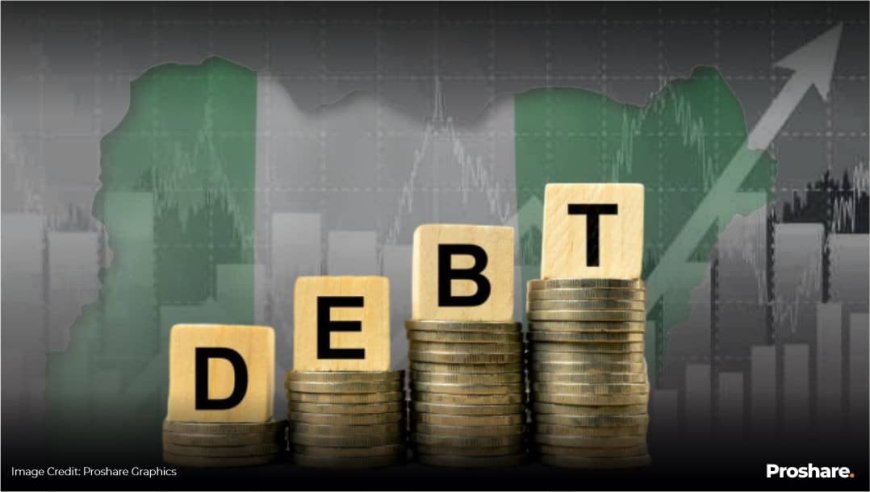
OPEN TELEVISION NAIJA (OTN) News reports that, according to the Debt Management Office (DMO), Nigeria’s total public debt stock has risen to N153.29 trillion as of September 30, 2025, reflecting a N900 billion increase from the N152.39 trillion recorded at the end of June.
OTN News further reports that the DMO in a statement published on its website, explained that the debt figure comprises both domestic and external obligations of the Federal Government as well as those of the 36 states and the Federal Capital Territory (FCT).
The breakdown showed that domestic debt stands at N81.81 trillion (about $55.47 billion), with the Federal Government accounting for the bulk at N77.81 trillion, up from N76.58 trillion in the second quarter of the year.

Furthermore, the report showed that subnational governments states and the FCT owe N4 trillion, a marginal increase from N3.96 trillion recorded in June.
On the external front, Nigeria’s debt climbs to N71.47 trillion (approximately $48.46 billion), underscoring the growing role of foreign borrowing in funding government expenditure.
The DMO attributed the rising debt stock to the Federal Government’s continued efforts to finance critical infrastructure projects in the face of persistent fiscal deficits.
The report also explained that Nigeria’s 2026 budget is projected to post a deficit of at least N23.85 trillion, equivalent to 4.28 per cent of gross domestic product (GDP).
Also, the upward debt trend has renewed debate over debt sustainability, revenue mobilisation, and the pressure of servicing obligations on public finances.
OTN News recalls that earlier in January 2025, the DMO dismissed claims that Nigeria’s debt ballooned from N21 trillion to N142 trillion under President Bola Tinubu, clarifying that the country’s total public debt stood at about N87 trillion at the start of the administration.
In May 2025, the National Orientation Agency, (NOA), reported that some debt reduction was recorded by federal and state governments, supported by increased disbursements from the Federation Account Allocation Committee (FAAC).
Despite these improvements, economists warned that without a sustainable fiscal strategy, including stronger revenue generation and prudent borrowing, Nigeria’s rising debt trajectory could pose long-term risks to economic stability, limit fiscal space, and constrain public service delivery.
OTN News, however, observes that as borrowing pressures persist, analysts said the challenge for policymakers will be balancing the need for growth-enhancing investments with the imperative of maintaining debt at manageable levels.
What's Your Reaction?