































Nigeria’s World Bank Debt Rises to $18.7bn as IDA Exposure Jumps by $1.9bn Under Tinubu - Report

By: Israel Adeleke
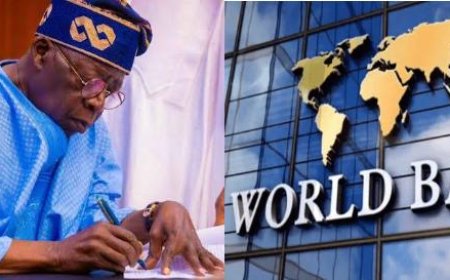
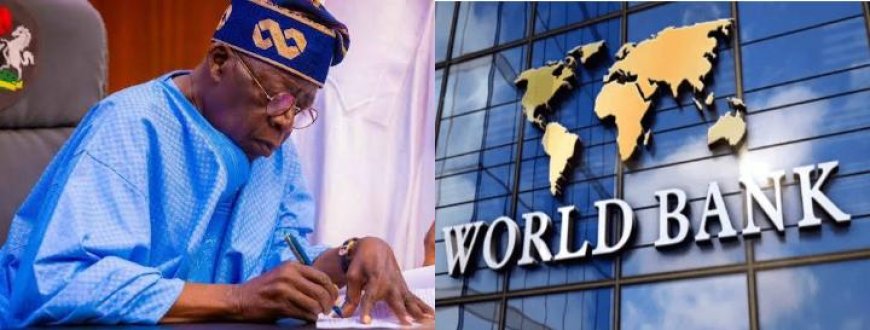
OPEN TELEVISION NAIJA (OTN) News reports as gathered that Nigeria’s debt exposure to the World Bank’s concessional lending window, the International Development Association (IDA), has risen sharply to $18.7 billion as of December 31, 2025, reflecting an increase of$1.9 billion within one year under the administration of President Bola Tinubu.
OTN News reports as gathered that the latest figures contained in the IDA’s Management’s Discussion and Analysis showed that Nigeria’s outstanding obligations climbed from $16.8 billion at the end of 2024, underscoring the country’s growing reliance on concessional multilateral financing to support economic reforms and development priorities.
According to the report, with the increase, Nigeria now ranks as the third-largest borrower globally in the IDA portfolio, behind Bangladesh with $23.0 billion and Pakistan with $19.4 billion.
Collectively, the top 10 IDA borrowers account for about 60 per cent of the institution’s total exposure, highlighting the concentration of concessional lending among a small group of developing economies.
OTN News observes that analysts attributed Nigeria’s rising IDA exposure largely to ongoing disbursements tied to its Country Partnership Framework with the World Bank, as well as expanded funding commitments in critical sectors such as health, education, infrastructure, and poverty alleviation programmes.
IDA credits are considered among the most affordable sources of external financing available to low-income and lower-middle-income countries, typically carrying zero or near-zero interest rates, repayment tenors of up to 38–40 years, and extended grace periods.
These terms significantly reduce immediate debt-service pressures when compared with commercial loans or Eurobond issuances.
OTN News further observes that the increase comes at a time when Africa’s largest economy is grappling with broader fiscal and macroeconomic challenges, including naira volatility, fluctuating oil revenues, and mounting demands to finance development initiatives amid constrained domestic revenue mobilisation.
Data from the Debt Management Office (DMO) show that as of June 30, 2025, Nigeria’s total external debt stock stood at approximately $46.98 billion.
Of this amount, the World Bank Group represents the country’s single largest creditor, accounting for $19.39 billion, comprising $18.04 billion from IDA and $1.35 billion from the International Bank for Reconstruction and Development (IBRD).
This means World Bank facilities account for roughly 41.3 per cent of Nigeria’s combined multilateral and bilateral external obligations, reinforcing the central role of concessional financing in the country’s external debt profile.
While the favourable terms of IDA loans ease short- to medium-term repayment risks, the pace of accumulation has reignited debates among economists and policy analysts over long-term debt sustainability.
Some experts argue that the rising exposure reflects Nigeria’s efforts to stabilise the economy and invest in human capital amid global economic uncertainty, while others caution that sustained borrowing, even on concessional terms, could narrow fiscal space for future administrations if growth does not keep pace.
The Federal Government has repeatedly maintained that funds sourced from multilateral lenders are directed at high-impact projects aimed at boosting productivity, creating jobs, and reducing poverty across the country.
Although no immediate official response was issued on the latest IDA figures, the rising exposure aligns with Nigeria’s continued engagement with multilateral partners under the current administration, as it seeks to balance development financing needs with prudent debt management.
What's Your Reaction?