























U.S. Set to Exit World Health Organization Amid Legal Dispute, Global Health Concerns

By: Israel Adeleke
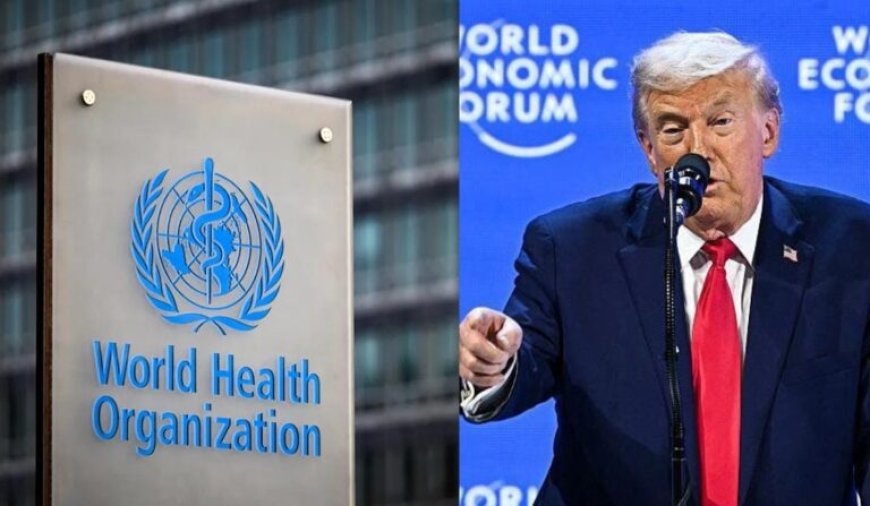
OPEN TELEVISION NAIJA (OTN) News reports as gathered that the United States is set to officially exit the World Health Organization (WHO) on Thursday, following a 2025 executive order by President Donald Trump, despite legal requirements to settle outstanding dues and mounting concerns over the impact of the decision on both U.S. and global health systems.
OTN News further reports as gathered that the withdrawal follows formal notice issued by President Trump on his first day in office in 2025, triggering a one-year exit process as stipulated under U.S. law.
However, the same law requires Washington to clear all outstanding financial obligations before withdrawing—a condition the WHO said has not been fulfilled.
According to the global health body, the U.S. still owes about $260 million in unpaid membership fees for 2024 and 2025.
On Thursday, a spokesperson for the U.S. State Department defended the decision, accusing the WHO of failing in its core mandate to properly manage and disseminate critical health information.
“The WHO’s failure to contain, manage and share information had cost the U.S. trillions of dollars and the president had exercised his authority to pause the future transfer of any U.S. government funds, support, or resources to the WHO,” the spokesperson said.
“The American people have paid more than enough to this organization and this economic hit is beyond a down payment on any financial obligations to the organization,” the spokesperson added in an emailed response.
Over the past year, global health experts and international leaders have repeatedly urged the United States to reconsider its decision, warning of far-reaching consequences.
WHO Director-General, Dr Tedros Adhanom Ghebreyesus, has been among the strongest voices calling for a reversal.
“I hope the U.S. will reconsider and rejoin WHO,” Tedros told reporters earlier this month. “Withdrawing from the WHO is a lose for the United States, and it’s a lose for the rest of the world.”
The WHO has confirmed that the issue of unpaid U.S. dues is expected to be discussed at its executive board meeting in February. A spokesperson for the organization said member states would consider the financial and operational implications of the U.S. withdrawal.
Legal experts have also raised alarms, questioning the legality of the move.
“This is a clear violation of U.S. law,” said Lawrence Gostin, founding director of the O’Neill Institute for Global Health Law at Georgetown University. “But Trump is highly likely to get away with it.”
Speaking at the World Economic Forum in Davos, billionaire philanthropist Bill Gates said he does not foresee the U.S. returning to the WHO in the near future.
“I don’t think the U.S. will be coming back to WHO in the near future,” Gates told Reuters. “The world needs the World Health Organization.”
OTN News observes that the U.S. exit has already triggered a financial crisis within the WHO. Washington has historically been the organization’s largest donor, contributing about 18 per cent of its total funding.
The loss has forced the agency to slash its management team by half, cut spending across departments and announce plans to reduce its workforce by about 25 per cent by mid-year.
Although the WHO said that it has continued to share health information with U.S. authorities over the past year, uncertainty remains over how cooperation will function once the withdrawal takes full effect.
Public health experts warned that the move could significantly weaken global disease surveillance and response mechanisms.
“The U.S. withdrawal from WHO could weaken the systems and collaborations the world relies on to detect, prevent, and respond to health threats,” said Kelly Henning, public health programme lead at Bloomberg Philanthropies.
As the United States formally exits the global health body, questions persist over how the decision will reshape international health cooperation and America’s role in responding to future global health emergencies.
What's Your Reaction?