
































Firewood Cooking Puts Nigerian Children at Risk of Low IQ, Experts Warn

By: Israel Adeleke
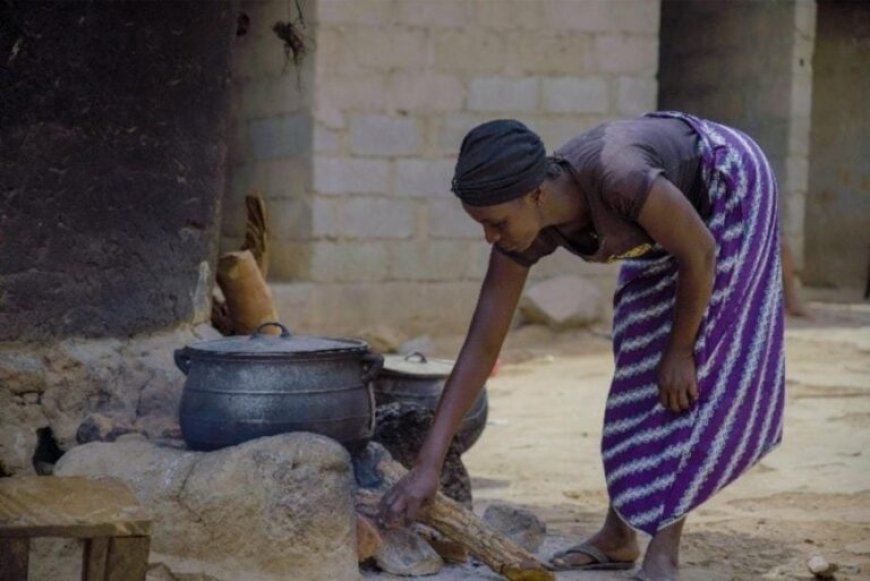
OPEN TELEVISION NAIJA (OTN) News reports that experts have raised fresh concerns over the widespread use of firewood for cooking in Nigeria, warning that prolonged exposure to smoke and toxic fumes may impair children’s cognitive development and increase the risk of low intelligence quotient (IQ).
OTN News further reports that they explained that, despite growing awareness of clean energy alternatives, millions of Nigerian women continue to cook with firewood and other traditional fuels, believing they cook food faster, better, and tastier.
However, this age-old practice is increasingly being linked to serious health consequences for both mothers and their children.
According to the National Bureau of Statistics (NBS) 2024 Nigeria Residential Energy Demand-Side Survey, about 67.8 per cent of Nigerians rely on firewood for cooking across agricultural, commercial, cultural, and religious activities.
State-level data show Bauchi State recording the highest dependence at 91.0 per cent, followed by Sokoto State at 77.8 per cent, while Oyo State recorded the lowest at 48.0 per cent.
Health experts noted that prolonged exposure to smoke from firewood and kerosene is associated with a wide range of illnesses, including pneumonia, lung cancer, low birth weight, eye problems, and respiratory diseases.
More alarmingly, new findings suggest that such exposure during pregnancy may significantly affect children’s brain development.
Speaking at the Household Air Pollution and Cognition (HAPCOG) stakeholders’ meeting, consultant psychiatrist Dr Yetunde Adeniyi, revealed that children born to mothers who cooked with firewood or kerosene showed developmental delays compared to those whose mothers used cleaner fuels such as ethanol.
Dr Adeniyi explained that the findings emerged from a follow-up study involving children born between 2015 and 2026, adding that the research marked the final phase of nearly two decades of investigation into the effects of traditional cooking fuels on women and children’s health.
The meeting was organised by the Centre for Population and Reproductive Health (CPRH) and the Healthy Life for All Foundation, in partnership with the University of Chicago.
The research focused on household air pollution, particularly smoke produced during cooking, which disproportionately affects women and children who spend more time around kitchens.
Families involved in the study were grouped into those using traditional fuels—such as firewood and kerosene—and those using clean fuels like liquefied petroleum gas (LPG) and ethanol.
Pregnant women from both groups were monitored throughout pregnancy and childbirth, while their children were followed for several years. At age seven, the children were assessed for intelligence, behaviour, and adaptive skills.
The results showed that children from households relying on firewood and kerosene recorded lower IQ scores and faced more developmental challenges than their peers from clean-fuel households.
Professor Sola Olopade, a pulmonologist and professor of medicine at the Pritzker School of Medicine, linked the observed cognitive challenges to the conditions in which unborn babies develop when mothers are exposed to household pollution.
He explained that polluted air reduces oxygen delivery to vital organs, including the placenta.
“The placenta is the lifeline between mother and child. When pollution causes blood clotting in small blood vessels, the placenta is damaged, and the baby develops in a low-oxygen environment. That means the baby grows under stress,” Olopade said.
He further explained that the body initially relies on antioxidants to neutralise pollution-induced free radicals, but when exposure is intense and nutrition is poor, these defenses collapse, leading to inflammation and a dangerous “thrombotic state.”
However, Professor Olopade cautioned against interpreting the findings to mean that earlier generations exposed to pollution were less intelligent. Rather, he said pollution suppresses human potential.
“Pollution does not erase intelligence; it suppresses it. Many people who succeeded despite these exposures might have been even more exceptional under cleaner conditions,” he noted.
He also stressed that the findings do not condemn affected children to lifelong impairment, adding that reducing exposure to pollution and improving access to clean cooking fuels could prevent further damage and support recovery.
Similarly, the Director of CPRH, University of Ibadan, Professor Dosu Ojengbede, said clean cooking fuels significantly improve maternal and child health outcomes.
According to him, women who use clean fuels experience lower blood pressure without medication, fewer miscarriages and stillbirths, and are more likely to carry pregnancies to full term.
Ojengbede added that newborns may continue to suffer the effects of pollutants inhaled by their mothers during pregnancy, underscoring the urgency of addressing household air pollution.
He called for stronger collaboration among scientists, lawmakers, health professionals, community leaders, and policymakers to promote the adoption of clean cooking energy such as LPG, solar power, and other sustainable alternatives.
Experts warn that while traditional fuels may appear cheaper in the short term, the long-term health costs—including medical bills, reduced productivity, and preventable deaths—far outweigh any perceived benefits, making clean cooking a critical public health priority for Nigeria.
What's Your Reaction?