





Exclusive: Nigeria's Catalogue of Inspector Generals of Police From 1964 Till Date

By: Israel Adeleke
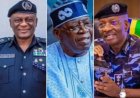
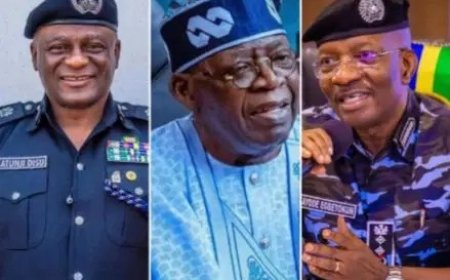
Shortly after the president Bola Ahmed Tinubu announced the resignation of the Egbetokun, the inspector general of police, and appoints Tunji as the acting IGP, OPEN TELEVISION NAIJA (OTN) News drastically compiled the name and year of IGP Nigeria has produced shortly after independent till date.
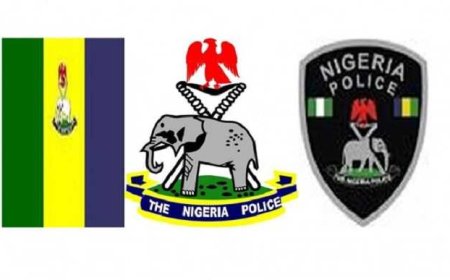
OTN News further reports in this special article that the office of the Inspector-General of Police has been the highest professional position in the Nigeria Police Force, since it was established in 1964.
OTN News gathered that over six decades, the IGP has been central to national security, adapting to shifts from colonial-era governance through military regimes and democratic rule.
Here are the names and year of IGP Nigeria has produced from 1964 till date.
Louis Orok Edet (1964 – 1966)
Kam Salem (1966 – 1974)
Muhammadu Dikko Yusufu (1975 – 1979)
Adamu Suleiman (1979 – 1981)
Sunday Adewusi (1981 – 1983)
Etim Inyang (1985 – 1986)
Muhammadu Gambo Jimeta (1986 – 1990)
Aliyu Attah (1990 – 1993)
Ibrahim Coomassie (1993 – 1999)
Musiliu Smith (1999 – 2002)
Mustafa Adebayo Balogun (2002 – 2005)
Sunday Ehindero (2005 – 2007)
Mike Mbama Okiro (2007 – 2009)
Ogbonna Okechukwu Onovo (2009 – 2010)
Hafiz Ringim (2010 – 2012)
Mohammed Dikko Abubakar (2012 – 2014)
Suleiman Abba (2014 – 2015)
Solomon Arase (2015–2016)
Ibrahim Kpotun Idris (2016–2019)
Mohammed Adamu (2019–2021)
Usman Alkali Baba (2021–2023)
Kayode Egbetokun (2023–2026)
Tunji Disu (2026-)
Early Formation and Military Era (1964–1999).
Louis Orok Edet (1964 – 1966), first IGP charged with institutionalising a national police structure. Successive leaders such as Kam Salem (1966 – 1974), Muhammadu Dikko Yusufu (1975 – 1979), Adamu Suleiman(1979 – 1981), Sunday Adewusi (1981 – 1983), Etim Inyang (1985 – 1986), Muhammadu Gambo Jimeta (1986 – 1990), Aliyu Attah (1990 – 1993), and Ibrahim Coomassie (1993 – 1999) led the force through coups, civil war, and military administrations that emphasised command-driven policing.
Democratic Era and Reform Challenges (1999–2015)
With the return to democracy in 1999, IGPs like Musiliu Smith (1999 – 2002), Mustafa Adebayo Balogun (2002 – 2005), Sunday Ehindero (2005 – 2007), Mike Okiro (2007 – 2009), and Ogbonna Onovo (2009 – 2010), faced rising crime, structural weaknesses, and public demand for policing reforms. Strategies increasingly targeted crime control, community policing, and professional standards, though successes were mixed.
Security Crises and Public Accountability (2015–2023)
Solomon Arase (2015–2016) and Ibrahim Kpotun Idris (2016–2019), navigated Boko Haram insurgency and nationwide insecurity.
Mohammed Adamu (2019–2021) and Usman Alkali Baba (2021–2023), confronted intense public scrutiny, especially amid growing youth protests and rising calls for human rights-focused policing.
Recent Tenures and Transition (2023–2026)
In June 2023, Kayode Egbetokun was appointed IGP by President Tinubu, succeeding Usman Alkali Baba.
His tenure witnessed intensified efforts at police reform and internal discipline but also faced criticism over operational challenges.
On 24 February 2026, Egbetokun resigned a move accepted by President Tinubu and Tunji Disu was appointed Acting IGP amid ongoing concerns over national security.
The Question now is, Who is Tunji Disu?
Tunji Disu, born 13 April 1966 on Lagos Island, is a veteran police officer with more than three decades of service in the Nigeria Police Force.
His career spans roles in intelligence, operations, and command positions, including leading the Force Criminal Investigation Department (FCID) and rapid-response units.
Disu’s leadership is expected to prioritise strategic policing reforms, intelligence-led operations, and strengthened internal discipline.
His appointment is currently in acting capacity pending confirmation by the Nigeria Police Council and subsequent Senate approval.
What's Your Reaction?